How to Avoid Driveway & Asphalt Scams in Michigan (Metro Detroit Homeowner Guide)

February 27, 2026
REQUEST AN ESTIMATE

The most common driveway/asphalt scams to watch for
1) The “leftover asphalt / leftover sealer” pitch

This is one of the biggest red flags. Many scam crews claim they have leftover material from a job “down the street,” then push a same-day deal. The work is often poor-quality, unnecessary, or they change the price after the fact.

2) High-pressure, “today only” tactics

If someone pressures you to decide immediately, it’s usually because they don’t want you to verify anything. The FTC specifically calls out pressure tactics, door-to-door “in the area” offers, and leftover material claims as common scam signs.

3) No written quote or vague scope

A legit contractor can write down the scope clearly: crack filling vs crack sealing, patching areas, thickness, square footage, prep steps, cure times, warranty info, etc. Scammers keep it vague so they can argue later.

4) Cash-only or “pay everything up front”

Another classic. The FTC flags cash-only and full upfront payment as common warning signs. Michigan consumer guidance also recommends being cautious with advance payments and documenting who you’re dealing with.


Simple checklist to hire a legit asphalt contractor:


✅ 1) Verify they’re local + check their footprint

  • Do they have a website, valid phone number, refrences?
  • Do they have consistent branding (trucks, website, invoices)?
  • Do they show real local jobs/photos?


✅ 2) Ask for proof of insurance + credentials

Michigan consumer protection guidance recommends asking if a contractor is licensed/insured and requesting proof.


✅ 3) Get a written quote with specifics

Your quote should include:

  • prep (cleaning, crack routing if applicable, edging, etc.)
  • materials (type of sealer, crack material, aggregate, etc.)
  • square footage/linear footage
  • timeline + cure/return-to-service instructions
  • payment schedule


✅ 4) Don’t let a random solicitor “start work now”

Reputable asphalt contractors rarely sell door-to-door. Industry groups specifically call this out as a scam warning sign.


✅ 5) Use reviews the right way

Look for patterns:

  • detailed reviews mentioning the job type + city
  • photos from customers
  • a mix of older and newer reviews
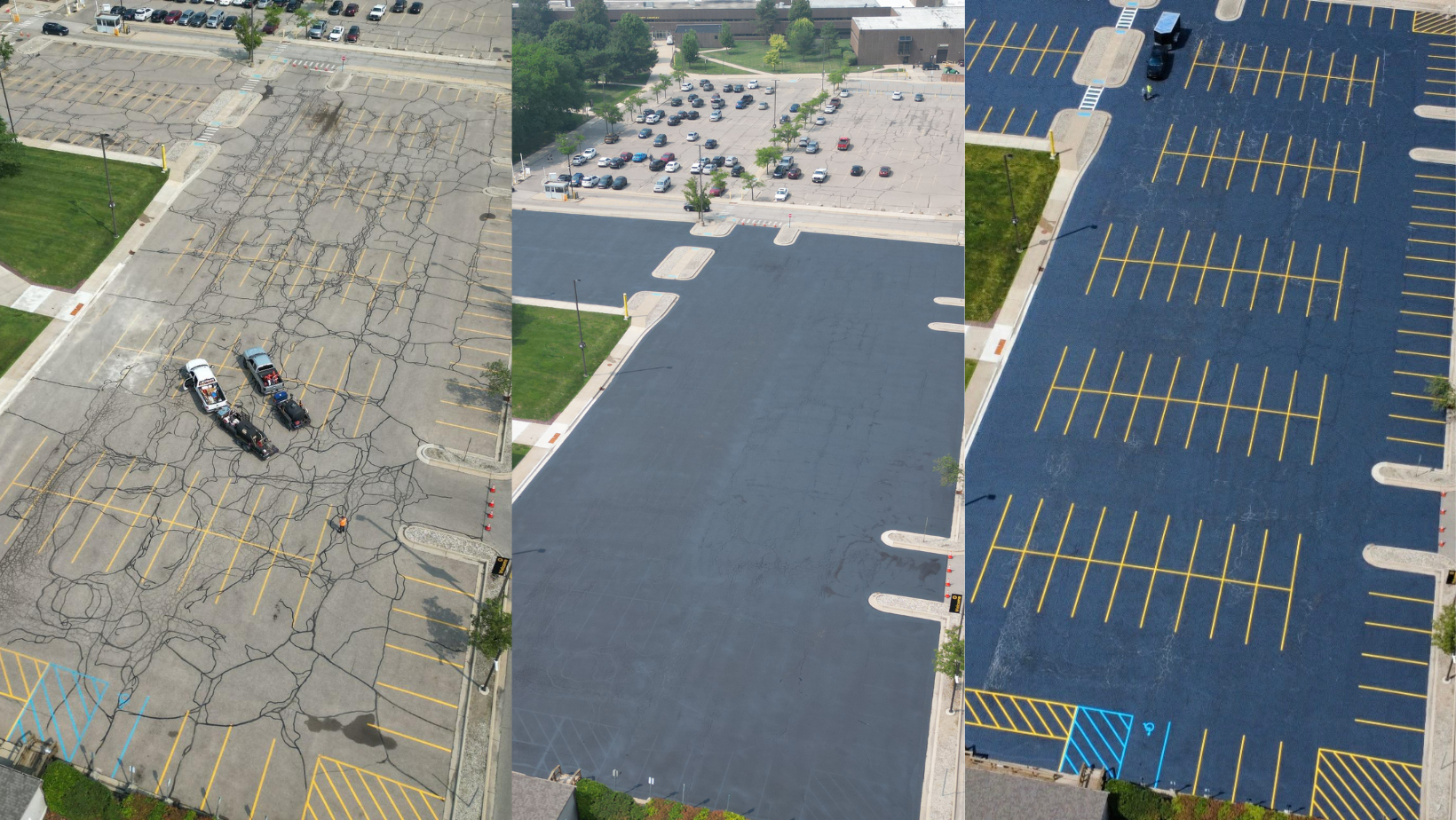
Three-panel view of a parking lot's renovation process: cracked pavement, asphalt paving, and new parking lines.
By Gabriel Genord February 2, 2026
WHEN DOES MY LOT NEED SEALCOATING?
By Gabriel Genord January 23, 2026
Why Michigan Weather Destroys Unmaintained Asphalt
By Gabriel Genord September 25, 2025
Learn the best timeframe for sealcoating and why colder weather can make or break your asphalt’s protection.
May 29, 2025
Discover the secrets behind effective parking lot sealcoating. Learn why it matters, how it’s done, pro tips, common mistakes, and answers to your burning questions about keeping your asphalt looking sharp and lasting longer.
March 7, 2023
Asphalt: The Essential Building Block of Modern Transportation Asphalt is a ubiquitous material that plays a vital role in the construction of modern transportation infrastructure. Whether you're driving on a highway, landing a plane on a runway, or cycling on a path, chances are you're using an asphalt surface. What is Asphalt?
March 7, 2023
Safety: Potholes can be dangerous for motorists, bicyclists, and pedestrians, as they can cause accidents and damage to vehicles and bicycles. By filling potholes, the road becomes smoother and safer for everyone who uses it. Preventing further damage: Potholes can expand and become bigger if left unfilled. Filling potholes as soon as possible prevents them from becoming larger and causing more damage to the road. Lower maintenance costs: Filling potholes is generally less expensive than repairing a road that has become severely damaged due to neglected potholes. Preventing further damage to the road also reduces the need for costly repairs in the future. Improving driving experience: Filling potholes can help improve the driving experience for motorists by reducing the jarring and discomfort caused by driving over potholes. Enhancing aesthetics: Potholes can be an eyesore and detract from the appearance of a road. Filling potholes can improve the aesthetics of the road and make it more pleasant to drive on.
New Blacktop driveway
March 7, 2023
The curing time for a new blacktop surface before sealcoating can vary depending on several factors, such as the temperature, humidity, and the type of asphalt mix used. Generally, it's recommended to wait at least 90 days after the installation of new blacktop before sealcoating. During the curing process, the asphalt hardens and releases volatile compounds that can interfere with the bond between the sealant and the asphalt surface. If the sealant is applied too soon, it may not adhere properly to the asphalt surface, which can result in a shorter lifespan and reduced effectiveness of the sealant. It's important to note that the curing time can be affected by weather conditions, such as temperature and humidity. Higher temperatures and humidity levels can accelerate the curing process, while lower temperatures and humidity levels can slow it down. To determine the ideal time to apply sealant to your new blacktop, it's best to consult with a professional contractor who can assess the condition of the asphalt and provide specific recommendations based on your location and weather conditions. In general, waiting at least 90 days after the installation of new blacktop is a good rule of thumb to ensure that the surface is adequately cured before sealcoating. 
driveway
March 7, 2023
Here are some of the benefits of crack-filling: Prevent further damage: By filling in cracks, you can prevent water and other debris from seeping into the underlying layers of the pavement and causing further damage. This can help to extend the life of the pavement surface and prevent costly repairs down the line. Improved appearance: Crack-filling can help to improve the appearance of a pavement surface by filling in unsightly cracks and creating a smooth, even surface. Enhanced safety: Filling in cracks can help to improve the safety of a pavement surface by reducing the risk of tripping hazards and creating a smooth, even surface for vehicles and pedestrians to navigate. Cost-effective: Crack-filling is a cost-effective way to extend the life of a pavement surface and prevent costly repairs down the line. It is generally less expensive than replacing the entire surface and can help to maximize the return on investment of a property. Eco-friendly: By repairing cracks instead of replacing the entire surface, you can help to reduce waste and minimize the environmental impact of your pavement maintenance activities.
March 7, 2023
Asphalt and concrete are two common materials used for paving roads, parking lots, and other surfaces. While both materials have their advantages and disadvantages, there are some key differences between the two that can affect their suitability for different applications. One of the main differences between asphalt and concrete is the materials used to make them. Asphalt is made from a mixture of aggregates, such as sand, gravel, and crushed stone, and a binder made from petroleum. Concrete, on the other hand, is made from a mixture of cement, water, and aggregates.
driveway sealcoating
March 7, 2023
The right temperature to sealcoat a driveway can depend on several factors such as the type of sealer being used, humidity levels, and the current weather conditions. However, in general, the ideal temperature range for sealing a driveway is between 50-90 degrees Fahrenheit (10-32 degrees Celsius). It's important to note that the temperature of the surface of the driveway also plays a crucial role in the sealing process. The surface temperature should be at least 50 degrees Fahrenheit and rising before the sealant is applied. If the surface temperature is too low, the sealer may not properly adhere to the surface and may not cure properly.